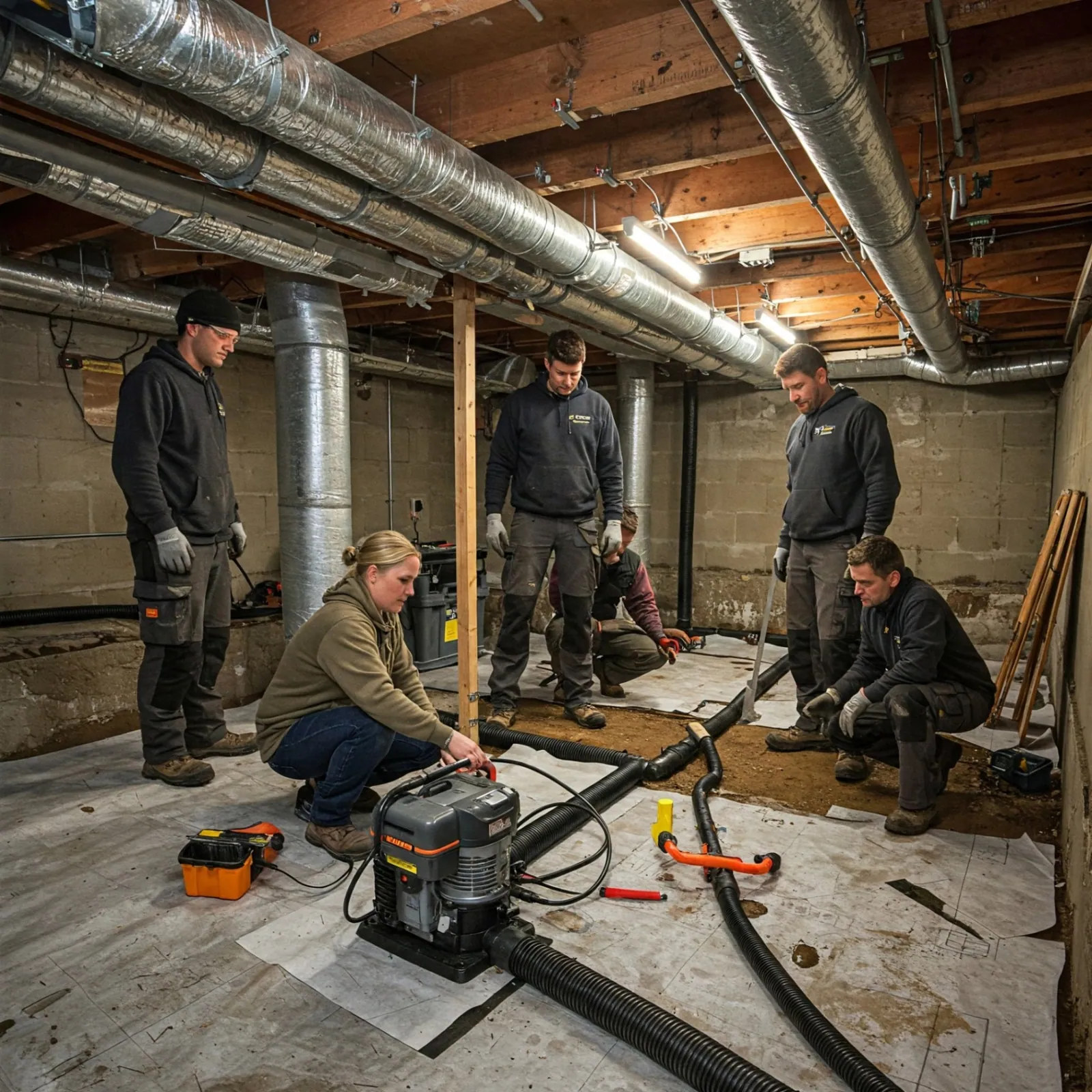
Basement Waterproofing in Toronto
A local decision guide for Toronto homeowners—how water typically enters GTA basements, what to compare in quotes, and how to find contractors who know your foundation era.
Reviewed by Waterproof Ontario editorial team · — prices in CAD. Figures are planning ranges, not quotes—confirm scope and price in writing with licensed contractors.
Loading contractors…
Waterproofing in Toronto
Toronto’s freeze–thaw cycle and urban heat island effects stress older poured walls and cold joints. Many neighbourhoods combine pre-war basements with later underpinning or benching, which changes how water tracks along the footing.
Soils & geology: Much of the city sits on lacustrine clays and silts deposited by ancient Lake Iroquois, with pockets of sand and fill nearer the waterfront and river valleys. Fill quality varies block by block, so moisture paths are not predictable from the street address alone.
Drainage & grading: Alleyways, shared driveways, and zero-lot-line homes often concentrate runoff against one foundation wall. Downspouts tied into weeping tile laterals—or discharged too close to the wall—are frequent contributors to seepage after storms.
Permits & inspections: Toronto building staff review structural underpinning, certain window-well configurations, and some drainage alterations. Always confirm whether your scope needs a permit or engineered drawings before work starts.
2026 cost ranges in Toronto
- Interior drainage / sump: $4,000–$10,000
- Exterior waterproofing: $10,000–$22,000
Tight lots, deeper basements, and permit reviews often push GTA exterior work toward the upper band.
Ontario 2026 cost hub & calculatorFind contractors
Use the directory to search Toronto and nearby communities—counts update as new pros join.
Browse full contractor directoryServices in Toronto
- Basement waterproofing
- Foundation repair
- Exterior waterproofing
- Sump pump installation
- Drainage systems
- Foundation waterproofing
All Ontario service areas · Greater Toronto Area hub
Problem & cost guides
How to decide on basement waterproofing in Toronto
Waterproof Ontario publishes this page so homeowners can choose a method and vet contractors—we do not install waterproofing ourselves. Start with the water path: damp after rain near a downspout is a different problem than a wet floor–wall joint during a thaw, or sewage surcharge in a storm.
Toronto’s freeze–thaw cycle and urban heat island effects stress older poured walls and cold joints. Many neighbourhoods combine pre-war basements with later underpinning or benching, which changes how water tracks along the footing.
Soils and lot context
Much of the city sits on lacustrine clays and silts deposited by ancient Lake Iroquois, with pockets of sand and fill nearer the waterfront and river valleys. Fill quality varies block by block, so moisture paths are not predictable from the street address alone.
Alleyways, shared driveways, and zero-lot-line homes often concentrate runoff against one foundation wall. Downspouts tied into weeping tile laterals—or discharged too close to the wall—are frequent contributors to seepage after storms.
Water table behaviour can shift between the Beaches, North York clay belt, Etobicoke creek corridors, and Scarborough bluffs-adjacent streets. Contractors familiar with your ward’s typical foundation era usually spot repeating failure patterns faster.
Housing stock
You will see Victorian brick, post-war bungalows, 1970s splits, and modern tall basements side by side. Finished basements with exterior access wells need different protection details than unfinished utility spaces.
Permits and inspections
Toronto building staff review structural underpinning, certain window-well configurations, and some drainage alterations. Always confirm whether your scope needs a permit or engineered drawings before work starts.
Interior vs exterior for Toronto lots
Tight lots, shared driveways, and mature landscaping often make exterior digs expensive or impractical without neighbour coordination. Interior drainage can control seepage with less disruption, but it does not replace fixing grading and downspouts. Ask each bidder to state which water path their scope fixes—and what it does not.
For budgeting methodology and the interactive calculator, use the Ontario waterproofing cost hub. For method-only exterior work, see exterior waterproofing in Toronto. Active leaks and standing water: wet basement repair and basement crack repair.
Sources
- City of Toronto — Building & construction (toronto.ca)
- Toronto and Region Conservation Authority — development and hazard guidance near ravines and watercourses (trca.ca)
- Cost bands and calculator: /costs-of-waterproofing/
Frequently asked questions — Toronto basement waterproofing
Compare Toronto contractors next
Use the directory listings on this page, then request written quotes against the same scope. Prefer clear diagnosis over the lowest headline price.
Get a Free Waterproofing Estimate
Fill out the form below and one of our waterproofing experts will contact you with a free estimate.
Request Your Free Consultation
Describe your water problem and we'll connect you with local contractors.
By submitting this form, you agree to be contacted about water-intrusion and related contractor services. We respect your privacy and will never share your information.
Resources & guides
Practical articles on moisture, foundations, and keeping water out of Ontario homes.
- Mold removal, remediation & basement mold
- Basement flooding & foundation damage
- What causes basement & foundation leaks?
- Interior vs exterior waterproofing
- Sika waterproofing
- Waterproofing membrane
- Basement waterproofing systems
- Warranties & service agreements
- Basement waterproofing cost (Ontario)
- Basement crack repair
- Benefits of pro waterproofing
- DIY vs professional waterproofing
- Damp proof membrane
- Schluter shower system