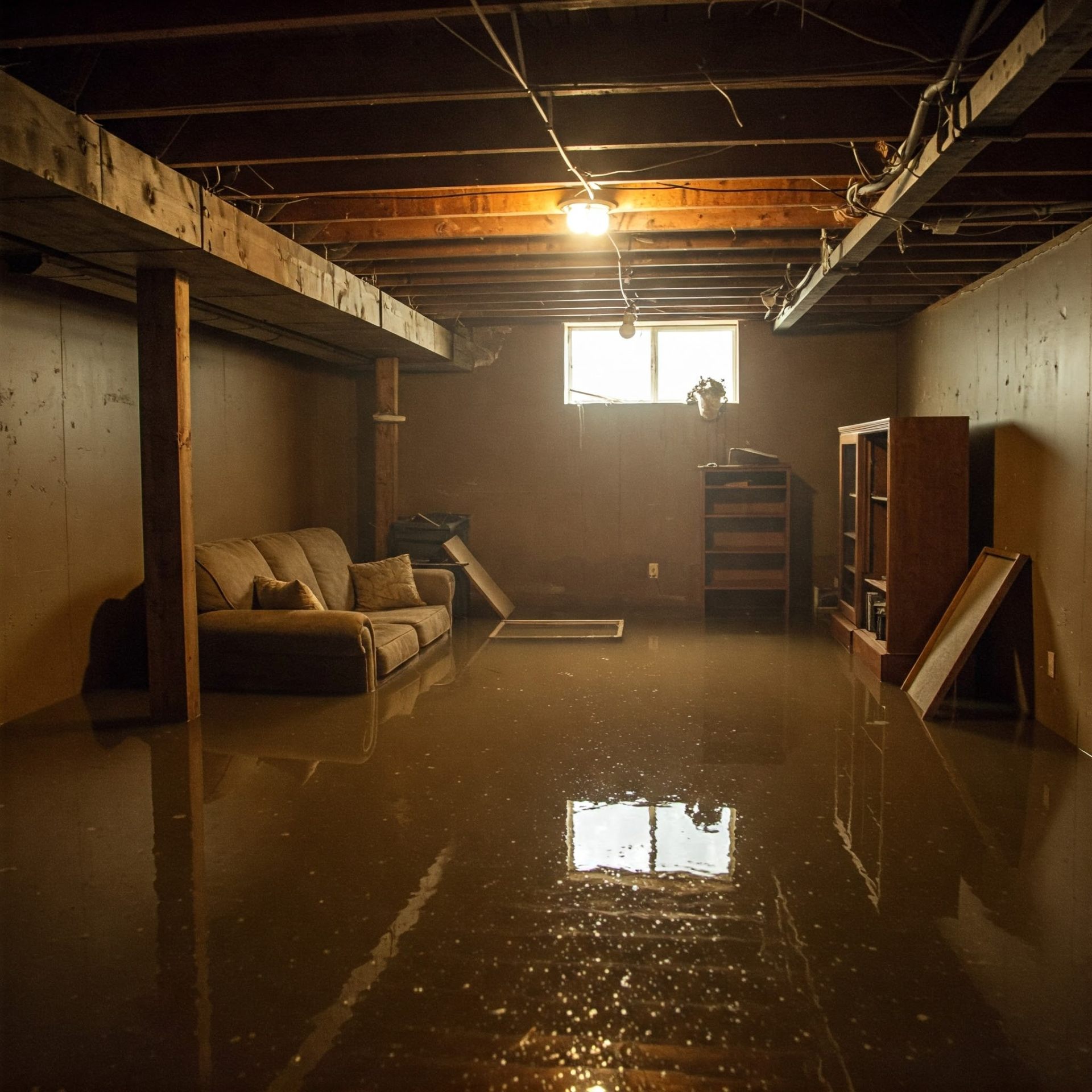
Common Causes of Basement Damage
Understanding what causes basement leaks is the first step toward preventing them.
Weather
Heavy rain and surface flooding can easily find its way into your basement. If your property's soil and drainage cannot handle excessive water, it's going to go somewhere—most likely inside your basement.
Poor Foundation Drainage
Your first line of defense against water leaks is exterior waterproofing solutions like gutters and downspouts. If either system is clogged, damaged, or unable to direct water away from your home, your basement will likely leak.
Hydrostatic Pressure
When soil around your foundation becomes saturated with moisture, it expands and exerts hydrostatic pressure, the constant force of water pressure on the foundation walls. If this force exceeds what the walls can withstand, it will cause cracking and inward bowing, compromising their structural integrity. Water then seeps through any available openings, including cracks and gaps around pipes or windows.
Internal Leaks
Your basement may contain plumbing pipes and appliances including washers and water heaters. If these essential items malfunction, leak, or burst, your basement could be inundated with water.
Sump Pump Failure
In the same vein, an outdated or failing sump pump system allows water to collect in your basement. If it lacks a proper lid, water can flood the floor, water vapor evaporates into the basement, and objects can fall into the pit and damage the pump.
Frequently Asked Questions
Learn More & Take Action
Resources & guides
Practical articles on moisture, foundations, and keeping water out of Ontario homes.
- Mold removal, remediation & basement mold
- Basement flooding & foundation damage
- What causes basement & foundation leaks?
- Interior vs exterior waterproofing
- Sika waterproofing
- Waterproofing membrane
- Basement waterproofing systems
- Warranties & service agreements
- Basement waterproofing cost (Ontario)
- Basement crack repair
- Benefits of pro waterproofing
- DIY vs professional waterproofing
- Damp proof membrane
- Schluter shower system